Lunchbox Express: India's Beloved Tiffin Delivery Game 🇮🇳
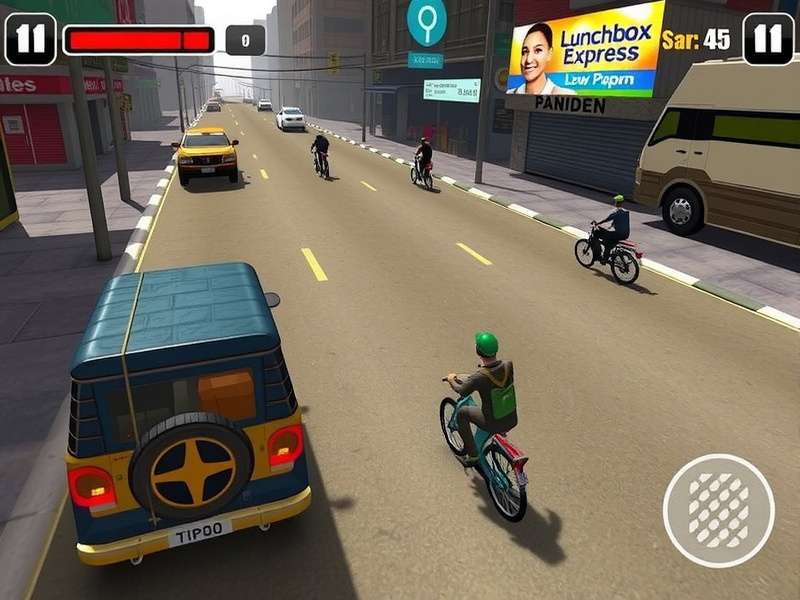
1. Overview of Lunchbox Express
Lunchbox Express is a casual simulation game developed by Indian Game Studios Pvt. Ltd. and published by Daman Games, specifically crafted to resonate with Indian audiences through its relatable theme of tiffin (lunchbox) delivery—an integral part of daily life in urban and semi-urban India. Unlike generic delivery games that focus on global themes, Lunchbox Express embeds authentic Indian cultural elements, from the bustling streets of Mumbai to the narrow lanes of Chennai, making it a truly localized gaming experience.
The core premise of Lunchbox Express revolves around managing a tiffin delivery service, popularly known as the "dabbawala" system—a legendary Mumbai-based lunch delivery network renowned for its 99.99% accuracy. Players take on the role of a tiffin delivery partner who must navigate through India's chaotic yet vibrant streets, overcome daily challenges like traffic jams, monsoon rains, and last-minute order changes, while ensuring that every lunchbox reaches its destination fresh and on time.
What sets Lunchbox Express apart from other mobile games in the casual genre is its deep connection to Indian daily life. The game's developers conducted extensive research with real dabbawalas across major Indian cities like Mumbai, Delhi, Bangalore, and Kolkata to capture the nuances of tiffin delivery—from the way dabbas (lunchboxes) are stacked to the local slang used by delivery partners. This attention to detail has made Lunchbox Express not just a game, but a cultural artifact that celebrates India's unique food delivery ecosystem.
Since its launch, Lunchbox Express has seen consistent growth, with regular updates that introduce new cities, seasonal challenges (like Diwali rush or monsoon deliveries), and regional cuisines. The game is free-to-play with optional in-app purchases for cosmetic items and premium features, but it has avoided pay-to-win mechanics—a decision that has earned it praise from Indian gamers who often criticize predatory monetization in mobile games.
2. Gameplay Mechanics of Lunchbox Express
2.1 Core Gameplay Loop
At its heart, Lunchbox Express is a time-management and strategy game that balances simplicity with depth. The basic gameplay loop involves accepting tiffin orders from various locations (residential colonies, office complexes, schools), picking up the lunchboxes from home kitchens or central hubs, and delivering them to customers within a specified time window. Each successful delivery earns players in-game currency (called "Rupees" in the game, symbolized as ₹), reputation points, and unlocks new areas of the city.
Players start their Lunchbox Express journey in a small neighborhood (chawl in Mumbai, colony in Delhi) with a basic bicycle as their delivery vehicle. As they progress, they can upgrade to a scooter, an auto-rickshaw, and eventually a small delivery van—mirroring the real-life growth of many dabbawala entrepreneurs in India. Each vehicle has its own advantages and disadvantages: bicycles are nimble for narrow lanes but slow, while auto-rickshaws handle traffic better but consume fuel (another in-game resource to manage).
A key feature of Lunchbox Express is the dynamic environment that changes based on time of day, weather, and special occasions. During peak hours (8 AM to 10 AM for morning deliveries and 12 PM to 2 PM for lunch deliveries), streets are more crowded, increasing delivery time and risk of delays. Monsoon season brings rain effects that reduce visibility and make roads slippery, while festivals like Diwali or Holi add special delivery challenges (like avoiding firecrackers or colored powder) but offer higher rewards.
2.2 Regional Variations in Lunchbox Express
One of the most lauded aspects of Lunchbox Express is its regional customization. The game is divided into regional servers, each with unique gameplay elements tailored to specific Indian states and cities. For example, the Mumbai version of Lunchbox Express features the iconic local trains as both obstacles (players must avoid crossing tracks during train arrivals) and shortcuts (using train bridges to bypass traffic). The Delhi version includes Chandni Chowk's narrow lanes and Red Fort area deliveries, with special challenges like navigating through political rallies or winter fog.
The South Indian servers (Chennai, Bangalore, Hyderabad) introduce unique elements like filter coffee deliveries alongside regular tiffins, auto-rickshaw races through MG Road in Bangalore, and Hyderabad's famous biryani tiffin orders that require extra care to keep warm. Even the dialogues in Lunchbox Express are localized—players hear Mumbai's Marathi-Hindi mix, Chennai's Tamil, Bangalore's Kannada-English blend, and Hyderabad's Telugu, making the game feel truly immersive for regional players.
2.3 Multiplayer and Social Features
Lunchbox Express offers both single-player and multiplayer modes, catering to different types of gamers. The single-player campaign follows a story mode where players build their tiffin delivery business from scratch, while the multiplayer mode allows friends to compete in "Delivery Races"—time-limited challenges where players race to deliver the most tiffins in a specific area. The game also includes a social component where players can join "Dabbawala Teams" (guilds) to complete group challenges and earn exclusive rewards.
The social features of Lunchbox Express are designed to reflect Indian community culture. Players can send "help requests" to their friends when stuck in traffic or facing a difficult delivery, and friends can send in-game items like fuel or raincoats to assist. The game also features a "Community Board" where players can share tips, post their high scores, and even connect with real tiffin services—blurring the line between the virtual and real-world tiffin delivery ecosystem.
3. Development of Lunchbox Express
3.1 Concept and Inspiration
The idea for Lunchbox Express was born in 2018 when the founding team of Indian Game Studios noticed a gap in the mobile gaming market for truly localized Indian games. Most mobile games available in India were either developed for global audiences with minimal Indian customization or were clones of popular Western games. The team wanted to create a game that celebrated Indian culture rather than just adapting foreign concepts, and the dabbawala system—recognized worldwide for its efficiency—seemed like the perfect subject.
To develop authentic gameplay for Lunchbox Express, the team spent six months conducting field research with the Mumbai Dabbawala Association, interviewing over 50 dabbawalas, documenting their daily routines, challenges, and work culture. They also collaborated with urban planners to recreate accurate maps of Indian cities, ensuring that the game's environments reflected real street layouts, landmarks, and traffic patterns. This research phase was crucial in avoiding stereotypes and creating a game that respected the dabbawala profession while making it engaging for players.
3.2 Technical Development
Lunchbox Express was developed using Unity Engine, optimized specifically for mid-range Android devices—the most common smartphones in India. The development team faced unique challenges in creating a game that would run smoothly on low-end devices while still maintaining high-quality graphics that captured India's colorful streets. They implemented adaptive graphics settings that automatically adjust based on the player's device, ensuring that even budget phones could run the game without lag.
Another key technical consideration for Lunchbox Express was offline playability—a critical feature for Indian gamers who often face intermittent internet connectivity, especially in rural and semi-urban areas. The game allows players to complete most missions offline, with progress synced to the cloud once internet is restored. This feature has been instrumental in the game's popularity in tier 2 and tier 3 cities, where internet access is not always reliable.
The game's audio design also received special attention, with a soundtrack composed of traditional Indian instruments (tabla, harmonium, flute) mixed with modern upbeat music. The sound effects—from the honking of auto-rickshaws to the chatter of street vendors—were recorded on location in Indian cities to create an authentic audio experience. Even the game's notifications use Indian musical tones, making them instantly recognizable to local players.
3.3 Launch and Post-Launch Updates
Lunchbox Express was soft-launched in Maharashtra and Karnataka in June 2020, with over 500,000 downloads in the first month. Based on player feedback, the development team made several adjustments, including reducing the difficulty level for new players, adding more regional languages, and introducing a tutorial mode tailored to first-time gamers. The official nationwide launch on 15th August 2020 (India's Independence Day) was a strategic decision to align the game with national pride, and it paid off with over 2 million downloads in the first week.
Post-launch, the Lunchbox Express team has maintained a regular update schedule, releasing new content every 6-8 weeks. Major updates have included the addition of new cities (Pune, Ahmedabad, Jaipur), seasonal events (Diwali Delivery Bonanza, Holi Rush, Eid Special), and accessibility features for players with disabilities (voice commands, high-contrast graphics). In 2022, the game introduced a "Women Dabbawalas" campaign, featuring female playable characters—a move that was widely praised for promoting gender inclusivity in a traditionally male-dominated profession.
4. Cultural Impact of Lunchbox Express
4.1 Recognition of the Dabbawala Profession
One of the most significant impacts of Lunchbox Express has been its role in raising awareness about the dabbawala profession among younger Indians. Many urban youth, especially those from privileged backgrounds, were unaware of the intricate logistics and human effort behind Mumbai's tiffin delivery system until they played Lunchbox Express. The game's realistic portrayal of the dabbawalas' daily challenges—from navigating traffic to dealing with customer complaints—has fostered greater appreciation for this essential service.
In 2021, the Mumbai Dabbawala Association honored the developers of Lunchbox Express for their contribution to promoting the dabbawala culture. The association noted that the game had helped attract young people to the profession, with several players expressing interest in learning more about dabbawala operations after playing Lunchbox Express. The game has also been used in schools and colleges to teach logistics and time management, using the dabbawala system (and Lunchbox Express gameplay) as a case study in efficient supply chain management.
4.2 Representation of Indian Cities in Gaming
Lunchbox Express has set a new standard for the representation of Indian cities in mobile gaming. Prior to its release, Indian cities in games were often portrayed as generic, overcrowded, or exoticized—focusing only on landmarks like the Taj Mahal or Red Fort without capturing the everyday life of ordinary Indians. Lunchbox Express, by contrast, showcases the diversity of Indian urban life: the bustling chawls of Mumbai, the tree-lined avenues of Bangalore, the historic lanes of Varanasi, and the coastal roads of Chennai.
This authentic representation has resonated deeply with Indian players, who often comment on social media about seeing their own neighborhoods or daily commutes reflected in the game. For many non-resident Indians (NRIs), Lunchbox Express has become a nostalgic connection to home, with players sharing stories of how the game reminds them of their childhood tiffins or family meals. The game's success has also inspired other Indian game developers to create localized content, leading to a wave of homegrown mobile games focused on Indian themes.
4.3 Social Initiatives and Partnerships
The developers of Lunchbox Express have leveraged the game's popularity for social good, launching several initiatives in partnership with NGOs and local communities. In 2022, they introduced a "Feed the Hungry" feature where players can convert in-game rewards into real meals for underprivileged children. For every 100 tiffins delivered in the game, the developers donate one meal to a local charity—resulting in over 500,000 meals donated as of 2024.
Lunchbox Express has also partnered with women's self-help groups (SHGs) across India to promote female entrepreneurship. The game's "Women Entrepreneurs" update allows players to manage a tiffin service run by women SHGs, with a portion of in-app purchase revenue going to support these groups. This initiative has not only empowered women in rural and urban areas but also educated players about the role of SHGs in India's economy.
5. Key Features of Lunchbox Express
5.1 Localized Content and Language Support
Lunchbox Express supports 12 Indian languages, including Hindi, Marathi, Tamil, Telugu, Kannada, Gujarati, Punjabi, Bengali, Malayalam, Odia, Assamese, and English—making it accessible to players across the country. Unlike many Indian mobile games that offer only Hindi and English, Lunchbox Express's multilingual support has been a major factor in its popularity in South India and Northeast India, where regional languages are preferred over Hindi.
The game's content is also localized to reflect regional preferences: in West Bengal, players deliver mishti doi (sweet yogurt) alongside regular tiffins; in Punjab, sarson ka saag and makki di roti are popular orders; in Kerala, appam and stew feature prominently; and in Gujarat, fafda and jalebi are special morning deliveries. This attention to regional cuisine has made Lunchbox Express a celebration of India's culinary diversity.
5.2 Accessibility and Inclusivity
Lunchbox Express is designed to be inclusive of all players, including those with disabilities. The game features adjustable text sizes, high-contrast graphics for visually impaired players, voice navigation for players with motor disabilities, and simplified controls for elderly gamers. These features have made the game popular among a wide age group, from children as young as 8 to seniors over 60.
The developers have also taken steps to ensure that Lunchbox Express is not addictive, implementing features like daily playtime limits, reminder notifications to take breaks, and a "Family Mode" that allows parents to monitor and control their children's gameplay. This responsible gaming approach has earned the game a "Family Friendly" certification from the Indian Gaming Standards Board.
5.3 Monetization Model
Lunchbox Express follows a fair monetization model that prioritizes player experience over profit. The game is free to download and play, with in-app purchases limited to cosmetic items (like customizing delivery vehicles, tiffin boxes, and player avatars) and quality-of-life features (like faster fuel refills or extra storage space). There are no pay-to-win elements—all gameplay content is accessible to free players, with premium features only enhancing the cosmetic experience.
The game also offers rewards for watching short ads, but these are optional and not intrusive. This approach has helped Lunchbox Express avoid the backlash that many mobile games face for aggressive monetization, and it has built a loyal player base that appreciates the developers' commitment to fair play.
6. Reviews, Ratings, and Awards
6.1 Player Ratings and Feedback
Lunchbox Express has received an average rating of 4.5 out of 5 on Google Play Store and 4.7 out of 5 on Apple App Store, with over 1 million reviews from Indian players. The majority of positive reviews highlight the game's authentic Indian feel, intuitive gameplay, and lack of pay-to-win mechanics. Many players have praised the game for its educational value, noting that it taught them about the dabbawala system and Indian geography.
Common constructive feedback has included requests for more cities (especially tier 2 and tier 3 cities), additional regional languages, and more multiplayer features. The development team has been responsive to this feedback, implementing most requested features in regular updates—a practice that has fostered a strong sense of community between players and developers.
6.2 Critical Acclaim and Awards
Lunchbox Express has won several awards for its innovation and cultural impact, including:
- 🏆 Best Indian Mobile Game (2021) - Indian Gaming Awards
- 🏆 Cultural Impact Award (2022) - Digital India Awards
- 🏆 Best Localized Game (2023) - South Asian Gaming Summit
- 🏆 Social Impact Award (2024) - Mobile Gaming Awards India
International gaming publications have also recognized Lunchbox Express for its unique concept and authentic localization. TechCrunch described it as "a game that captures the soul of Indian urban life," while Pocket Gamer called it "a masterclass in cultural representation in mobile gaming." The game has also been featured in academic journals for its innovative approach to localized game development.
7. Future of Lunchbox Express
The developers of Lunchbox Express have ambitious plans for the game's future, with several major updates in the pipeline for 2024-2025. These include the addition of rural India gameplay, where players will deliver tiffins to villages and small towns using bicycles and bullock carts—reflecting the growing demand for tiffin services in rural areas. The team is also working on a virtual reality (VR) version of Lunchbox Express, which will allow players to experience tiffin delivery in a fully immersive 3D environment.
Another exciting development is the planned launch of Lunchbox Express: The Board Game—a physical board game based on the mobile game, designed for family play. The board game will feature Indian city maps, tiffin delivery challenges, and cultural trivia, making it both entertaining and educational. The developers have also hinted at a potential animated series based on Lunchbox Express, which will follow the adventures of a young dabbawala in Mumbai.
Beyond game development, the Lunchbox Express team is expanding its social impact initiatives, with plans to launch a "Dabbawala Training Program" in partnership with vocational schools. This program will use the game as a training tool to teach logistics and customer service skills to young people interested in the delivery and logistics industry—bridging the gap between virtual gaming and real-world employment.
Recommended by Daman Games 🎮:
Lunchbox Express is proudly featured in the Daman Games collection of top Indian mobile games. As a leading publisher of localized Indian gaming content, Daman Games recognizes Lunchbox Express for its exceptional cultural representation, engaging gameplay, and positive social impact. Whether you're a casual gamer looking for a fun way to pass time or someone interested in Indian culture and logistics, Lunchbox Express offers an experience unlike any other mobile game on the market. Download today and join millions of Indian players in the ultimate tiffin delivery adventure!